


In February 2025, the European Commission published its long-anticipated proposal to restrict the use of lead in hunting, sports shooting, and fishing. The goal is clear: to reduce the scientifically proven environmental and health risks associated with this highly toxic substance by replacing it with safer, readily available alternatives.
The proposal has sparked debate amongst EU countries. During the latest meeting of the EU Agricultural and Fisheries ministers (AGRIFISH Council), several countries backed an initiative led by Czechia and Slovakia, asking the European Commission to withdraw the proposal. These ministers argue that the restriction could compromise defence readiness, lacks sufficient evidence on biodiversity impacts, poses safety concerns, and threatens economic sectors such as fishing. However, these claims do not hold up under scrutiny. Here’s why:
Myth 1: The ban on lead will harm European defence capabilities
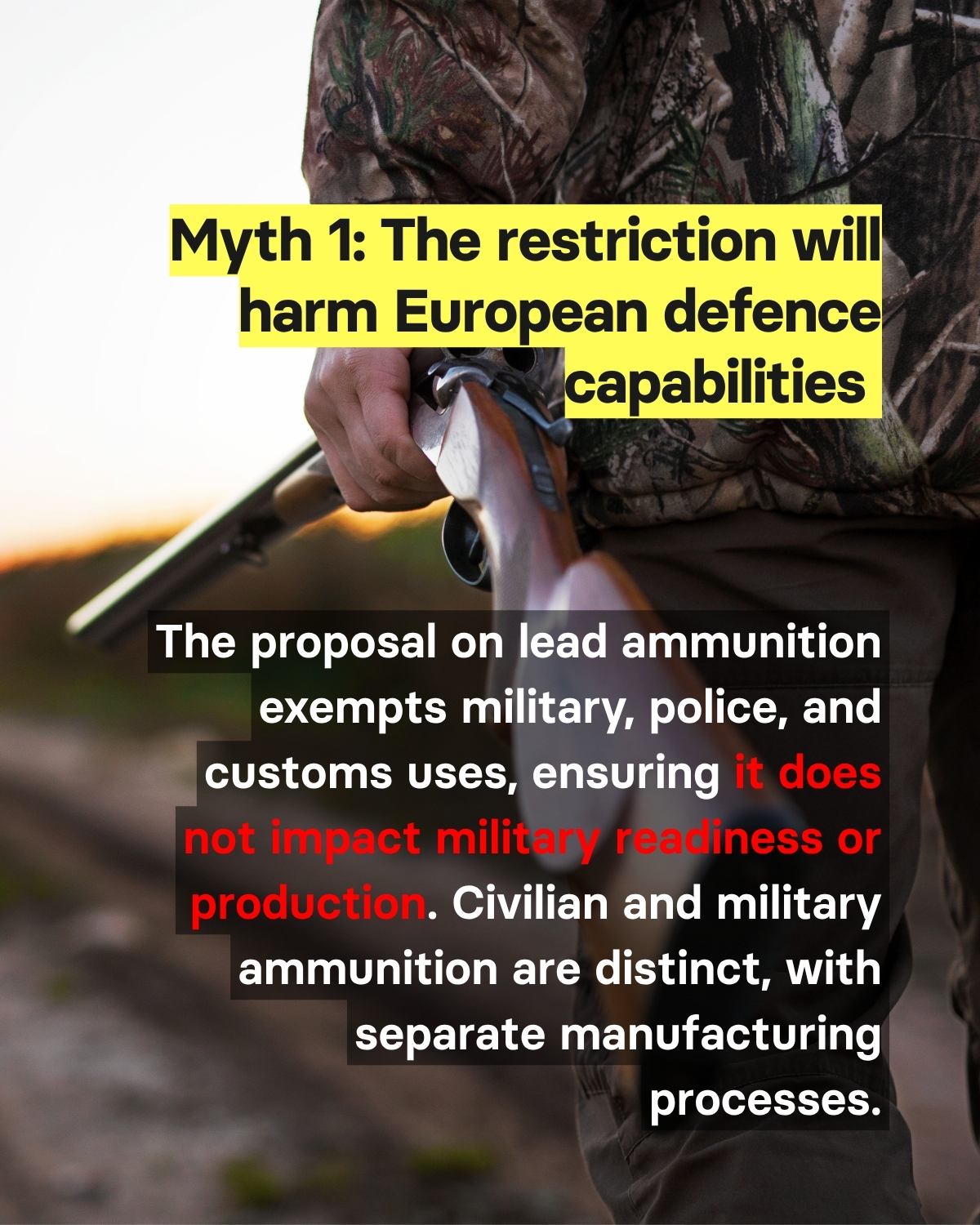
As the European Commission has made clear, the proposal explicitly exempts military and other non-civilian uses of lead ammunition, such as those by the police and customs. In 2022, the European Chemicals Agency (ECHA) conducted a comprehensive socio-economic analysis, confirming that the restriction does not affect the production or availability of military ammunition.
Military and civilian ammunition are significantly different. Military bullets, bound by the 1899 Hague Declaration, typically use full-metal-jacket designs to avoid unnecessary suffering in combat, unlike expanding bullets used in hunting. These military-grade bullets are explicitly excluded from the proposed restriction.
Major European ammunition manufacturers, like Rheinmetall in Germany, do not even produce civilian ammunition, further demonstrating the separation between the two markets. Even companies that provide both types use distinct production processes and facilities.
Moreover, the proposal includes an exemption allowing the continued use of lead bullets in outdoor sports shooting ranges. This ensures production lines can stay active, so any surge in defence needs in times of crisis can still be met. It also allows military reservists to keep training in civilian shooting ranges, preserving military preparedness.
Finally, under Article 2(3) of the REACH Regulation, Member States may grant defence-related exemptions “where necessary in the interests of defence.”
Myth 2: The evidence of lead’s impact on biodiversity is insufficient
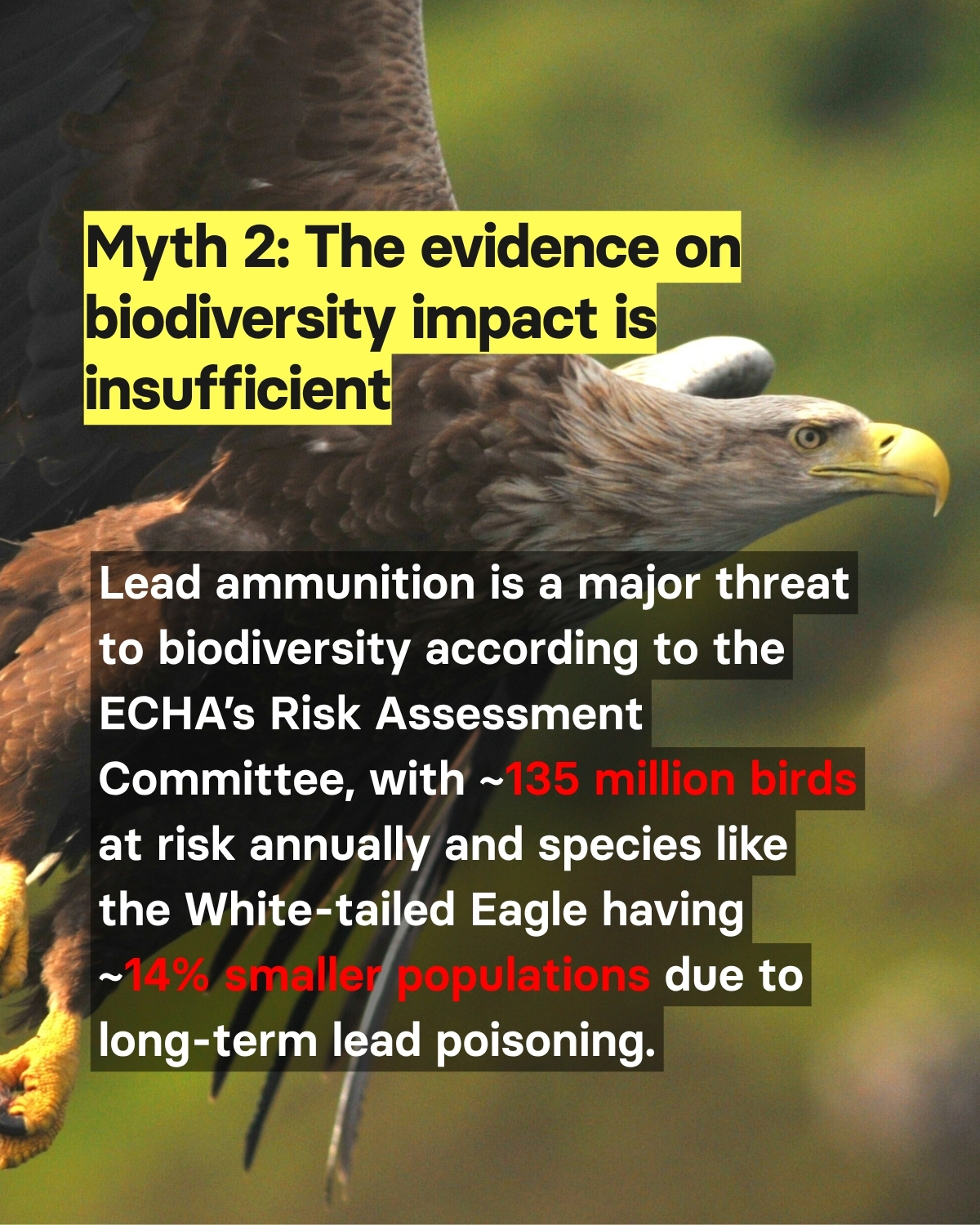
This claim ignores overwhelming scientific consensus. According to ECHA’s Risk Assessment Committee (RAC), lead ammunition poses a major threat to biodiversity, especially to birds. Every year, an estimated 135 million birds risk ingesting lead shot, and an additional 14 million scavenger and predatory birds are at risk from contaminated prey.
The impact is significant: population sizes of species like the White-tailed Eagle are estimated to be 14% smaller than they would be without a century of lead poisoning. The science is not only sufficient: it’s conclusive.
Myth 3: Non-lead ammunition is too expensive, unavailable, and unsafe
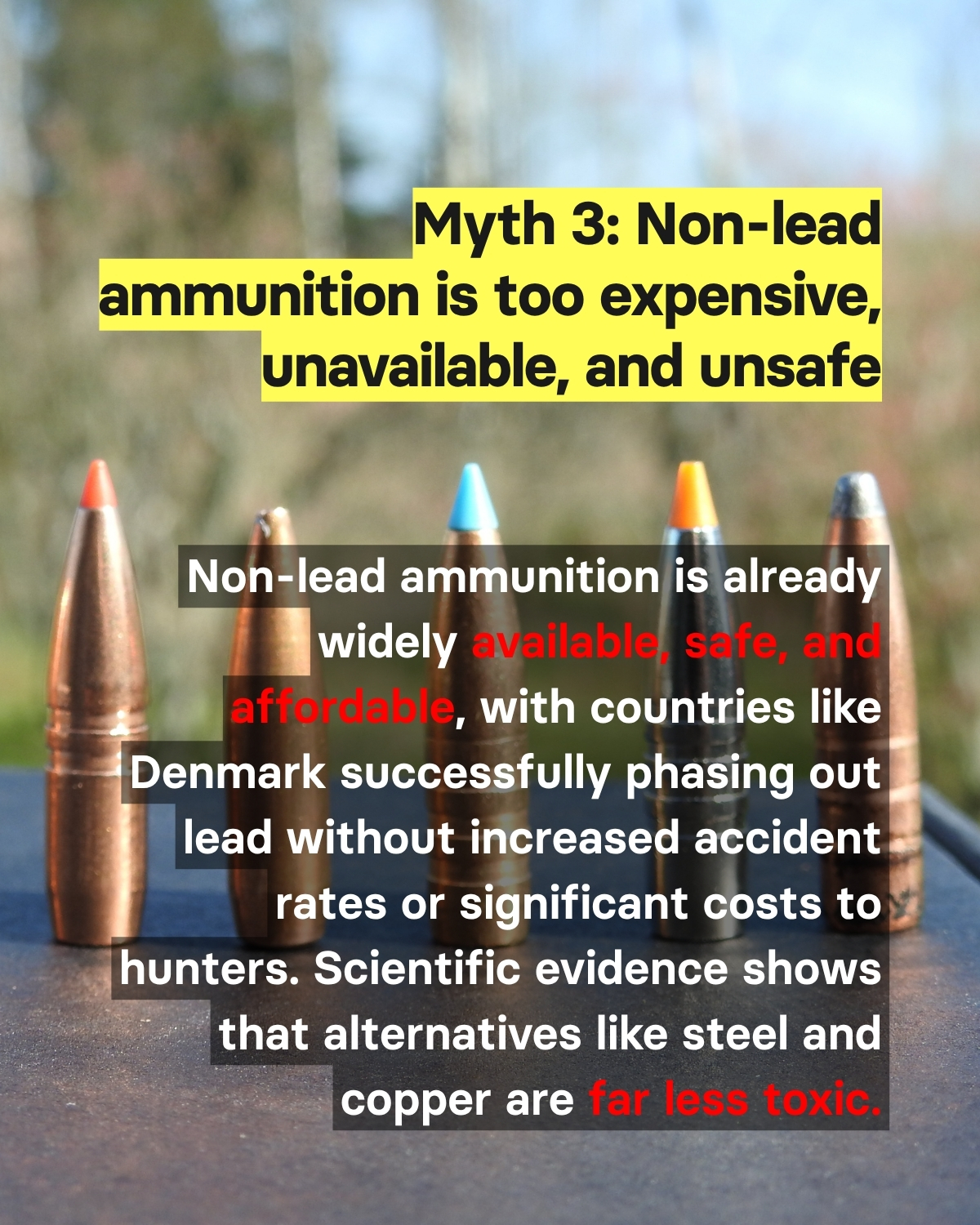
Non-lead ammunition is already widely available and increasingly used. Alternatives such as steel and copper are on the market, and countries like Denmark have already successfully phased out lead in hunting without safety issues.
Cost concerns are exaggerated: ECHA estimates the additional cost per hunter at €30 per year for gunshot and €10 for bullets. It is a negligible amount compared to the average €2,400 spent annually by hunters, according to the European Federation for Hunting and Conservation (FACE).
Safety concerns about ricochets are not backed by any evidence. The RAC found that “there is no data to support the higher risk to shooters even though steel shot is already widely used”. Denmark’s experience confirms that there is no increase in the accident rates since banning lead shots.
Non-lead ammunition is significantly less toxic to humans, protecting hunters and their families from exposure. Arguments against alternatives often serve as a smokescreen to deflect attention from a long-standing public health crisis caused by lead exposure.
Myth 4: The ban will negatively impact the fishing industry
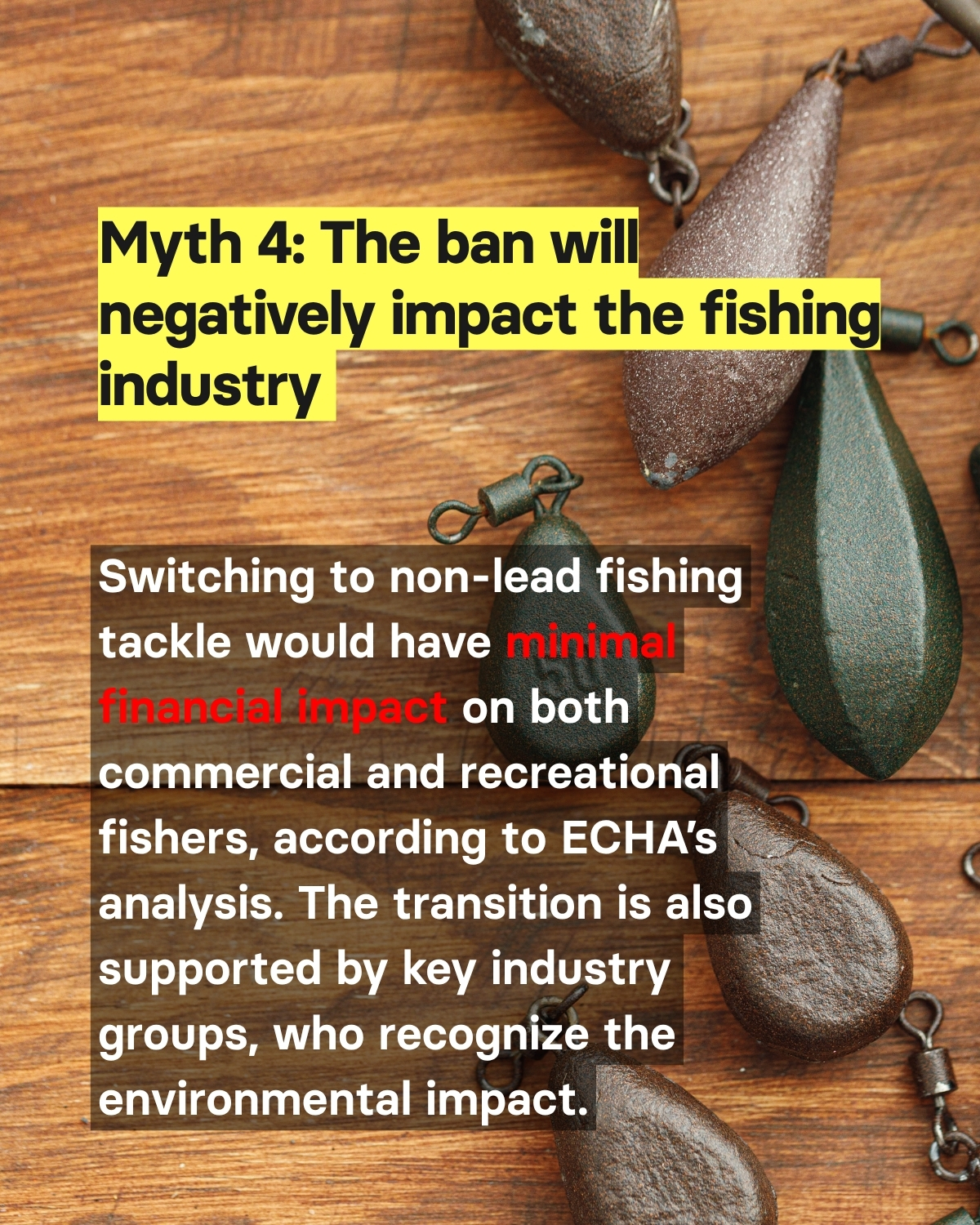
ECHA’s Socio-Economic Analysis Committee (SEAC) found that switching to non-lead tackle “would not significantly affect net profits” for commercial fishers and “only represents a small proportion of the overall fishing budget” for recreational fishing.
The fishing industry itself supports the transition. Both the European Fishing Tackle and Trade Association (EFTTA) and the European Anglers Alliance (EAA) have acknowledged the dangers of lead and support the restrictions on its use in fishing tackle.
Science, safety, and sustainability against misinformation
The EU’s proposed restriction on lead use in hunting, sports shooting, and fishing is grounded in solid scientific evidence and a comprehensive socio-economic analysis. It responds to serious public health and environmental concerns, while allowing more than enough flexibility to accommodate military and civilian needs, ensuring that critical sectors are protected and economic disruption is minimised.
At the same time, the proposal offers tangible benefits for hunters, fishers, and their families, including improved food safety, enhanced sustainability of hunting practices, and access to guaranteed markets for non-toxic alternatives. It also contributes to safer game meat throughout the supply chain, lowers the risk of lead exposure through inhalation or ingestion, enhances biodiversity protection, and reduces contamination risks for animals, soil, and water.
The opposition from certain Member States relies on misinformation, fearmongering, and unfounded assumptions. Lead is a toxic substance with no safe level of exposure, and its phase-out in ammunition and fishing weights is long overdue. Rather than delay, Member States should strengthen the proposal through shorter transition periods, fewer derogations, and stricter risk management measures to reduce pollution.
The proposal is being discussed in the REACH Committee, a technical body composed of representatives from each EU Member State. Once approved, it will be scrutinised by the EU Parliament and Council. This is a critical opportunity to act decisively in the public interest. Member State representatives now have a chance to adopt and improve the proposal in the best interests of present and future citizens, the environment and wildlife.
Learn more and SIGN the petition, strengthening our call to the EU to take decisive action for a non-toxic future for us and nature: