


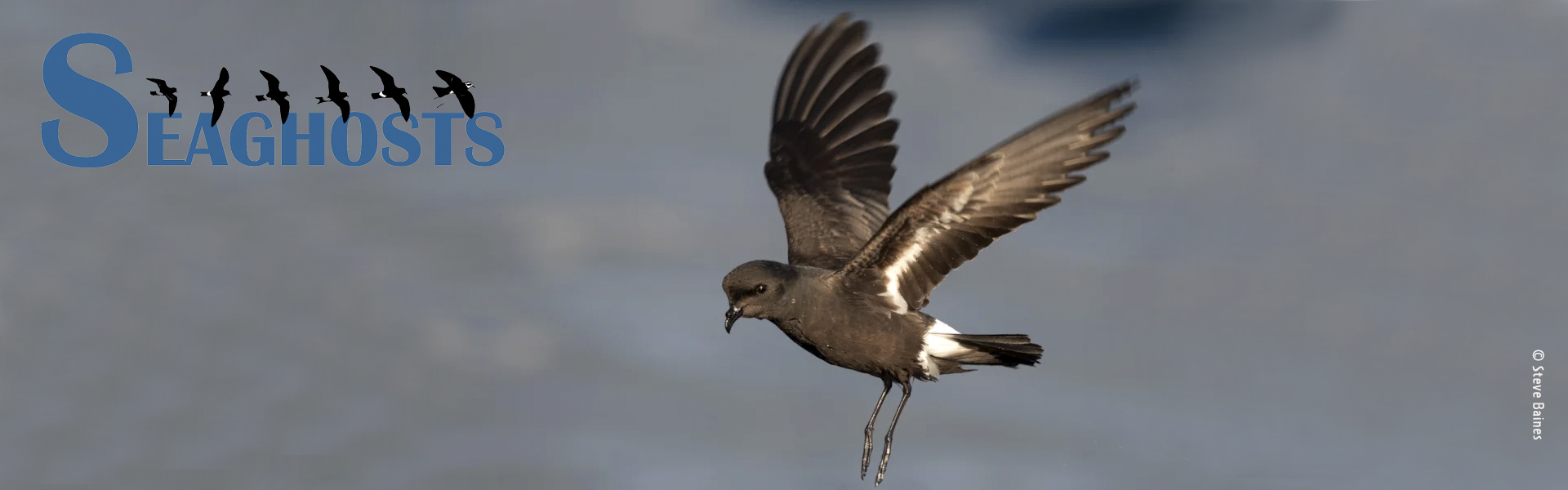
Since spring 2024, the Hellenic Ornithological Society has been participating in the SEAGHOSTS Project, funded by the Biodiversa+ initiative. This Project has given us the opportunity to work more intensively and systematically with a seabird species we’ve been monitoring since 2013: the European Storm Petrel, the smallest of all seabirds, also known as the "ghost" of Europe’s seas. In collaboration with a network of experienced partners from 12 countries, mainly universities and researchers specializing in pelagic seabirds, we exchanged knowledge and experience and developed a shared research protocol.
In Greece, we focused on two colonies of the species, one in the Aegean Sea and one in the Ionian Sea. In July of last summer, we successfully placed 10 GPS tags (from Pathtrack) and 19 GLS tags (from Migrate). These devices are extremely small, weighing less than one gram! This technological advancement finally allowed us to track this tiny pelagic seabird and collect crucial data on its foraging and wintering areas.
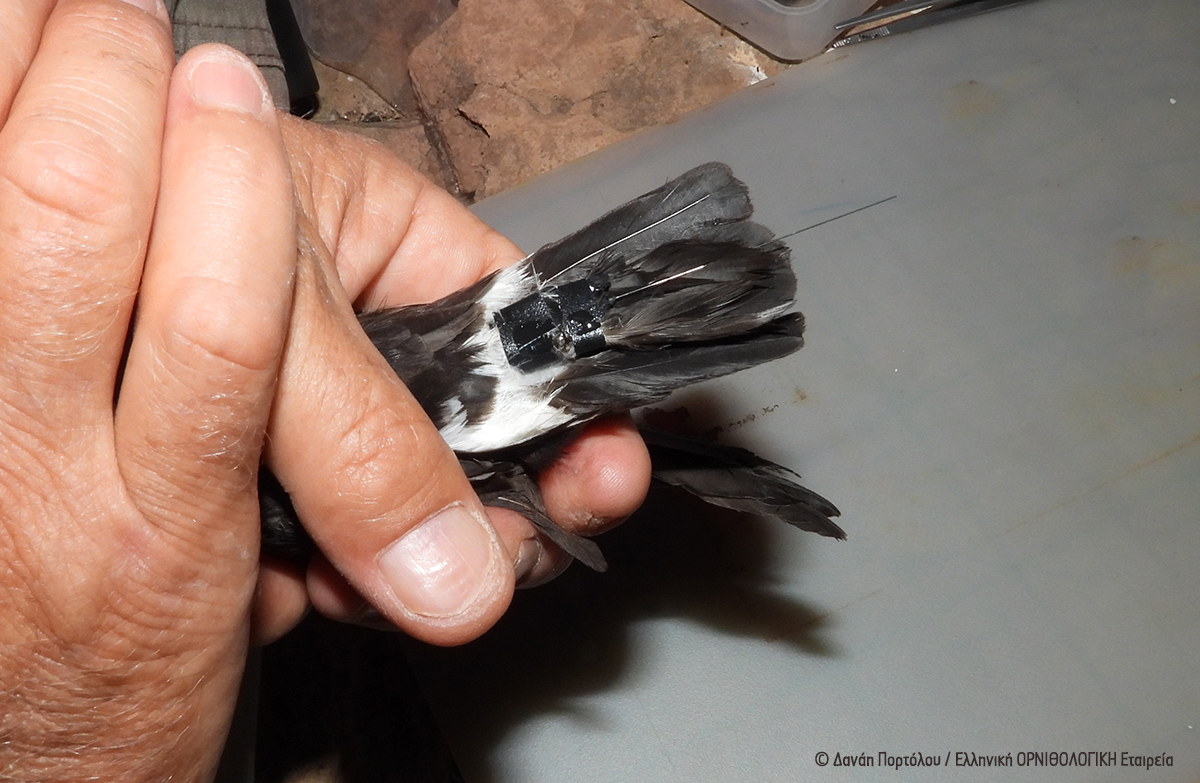
Tagging a European Storm Petrel with a GPS
The GPS tags were attached to the base of the birds' tails and remained in place for 3-4 weeks. The transmitters we recovered, after multiple visits to each colony, showed that during the late incubation phase or shortly after chicks hatched, the adult birds were foraging along the coast of Turkey, and tracks reached up to 900 km!
The GLS devices were safely attached to the bird’s leg using a metal ring, designed to be removed this year. These loggers will allow us to determine where the European Storm Petrels overwinter.
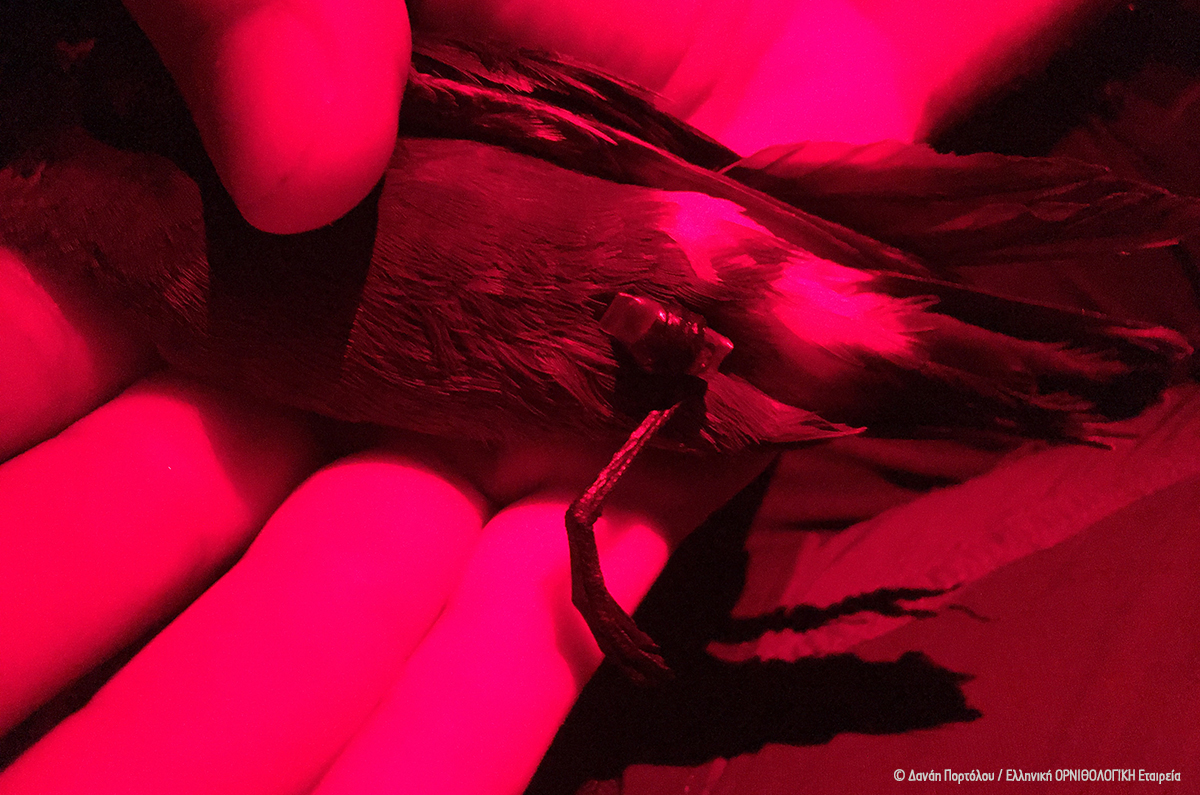
The GLS device is attached to the bird’s leg and removed during the following breeding season in order to retrieve the recorded data
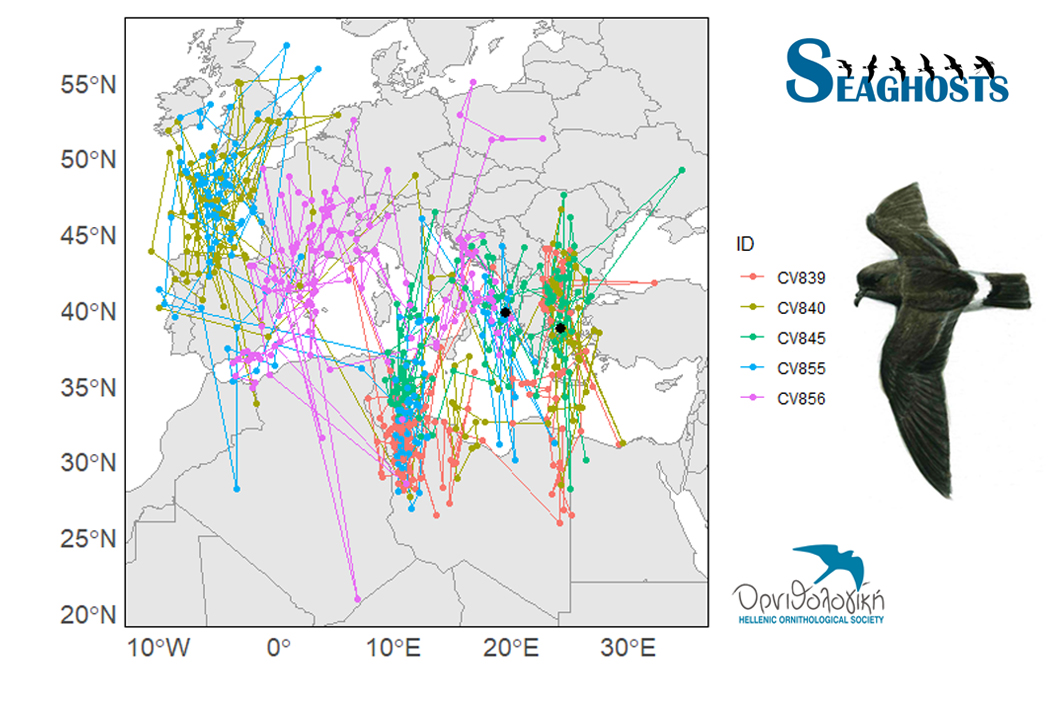
The data from the first five GLS devices are impressive, revealing significant differences between individuals. Adult birds from both colonies, as expected, used the central Mediterranean following the breeding season. However, at least two birds spent the winter outside the Mediterranean, reaching as far as the Bay of Biscay (off the western coasts of France and northwestern Spain)!
The next field visits are scheduled for this July, during which the systematic ringing of adult birds will continue, and we hope to recover more GLS devices.
Stay tuned! The "little ghosts" of the Greek seas still have many surprises to reveal!