
A pioneering initiative for the conservation of the Lesser White-fronted Goose and wetland ecosystems
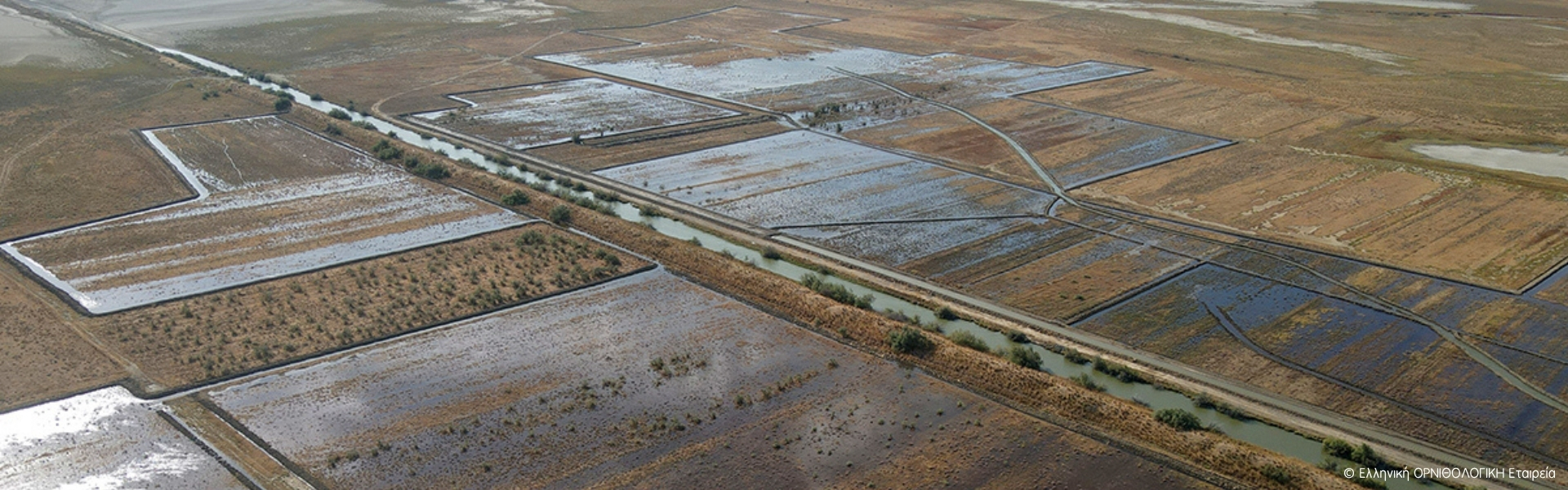
One of the most innovative nature restoration initiatives in Greece is currently underway in the internationally important wetland of the Evros Delta. The project aims to restore key wet grassland habitats used by the Lesser White-fronted Goose -Europe’s most endangered waterbird- during its wintering period.
Over recent decades, the Evros Delta has undergone significant ecological degradation. The reduction of freshwater inflows from the Evros River, surrounding streams, and rainfall has led to increased soil salinity and a marked decline in vegetation suitable for foraging from the Lesser White-fronted Goose and other wildlife. At the same time, notable changes have been observed in the migratory behaviour of the species. The Lesser White-fronted Goose, which winters in Greek wetlands for approximately six months each year, has traditionally used both Lake Kerkini and the Evros Delta (and historically Lake Ismarida). However, in recent years, the birds arrive earlier at Lake Kerkini and, in some winters, bypass the Evros Delta entirely.
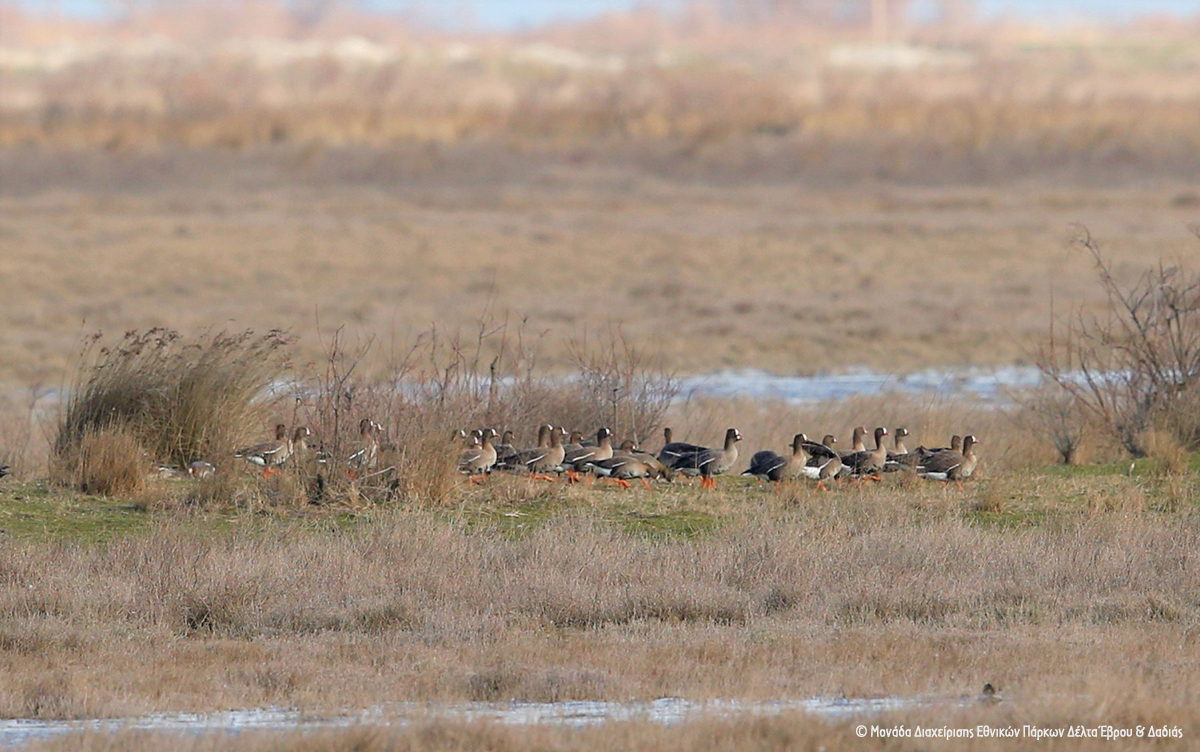
The Lesser White-fronted Goose has been the focus of conservation and research efforts in the Evros Delta for over two decades. Within the framework of the European LIFE LWfG Climate programme dedicated to safeguarding the species along its migratory route -implemented in Greece by the Hellenic Ornithological Society and the Natural Environment & Climate Change Agency (NECCA)- a targeted restoration effort is now being realized. The Hellenic Ornithological Society has acquired degraded agricultural land adjacent to the geese’s main wintering areas and, in close collaboration with the Management Unit of Evros Delta and Dadia National Parks (NECCA), is restoring these areas based on a dedicated Habitat Management and Restoration Plan for the Lesser White-fronted Goose. The overarching goal is to make these habitats once again suitable and attractive for the species, as well as for other wildlife dependent on wet grasslands.
To date, approximately around 40 hectares of land have been secured, with a long-term commitment to their exclusive use for nature conservation. Management is structured around three key approaches: active vegetation management, including sowing with local grassland plant species, hydrological restoration, through the reintroduction of freshwater and the simulation of seasonal flooding, and passive restoration, allowing natural ecological processes to drive recovery.
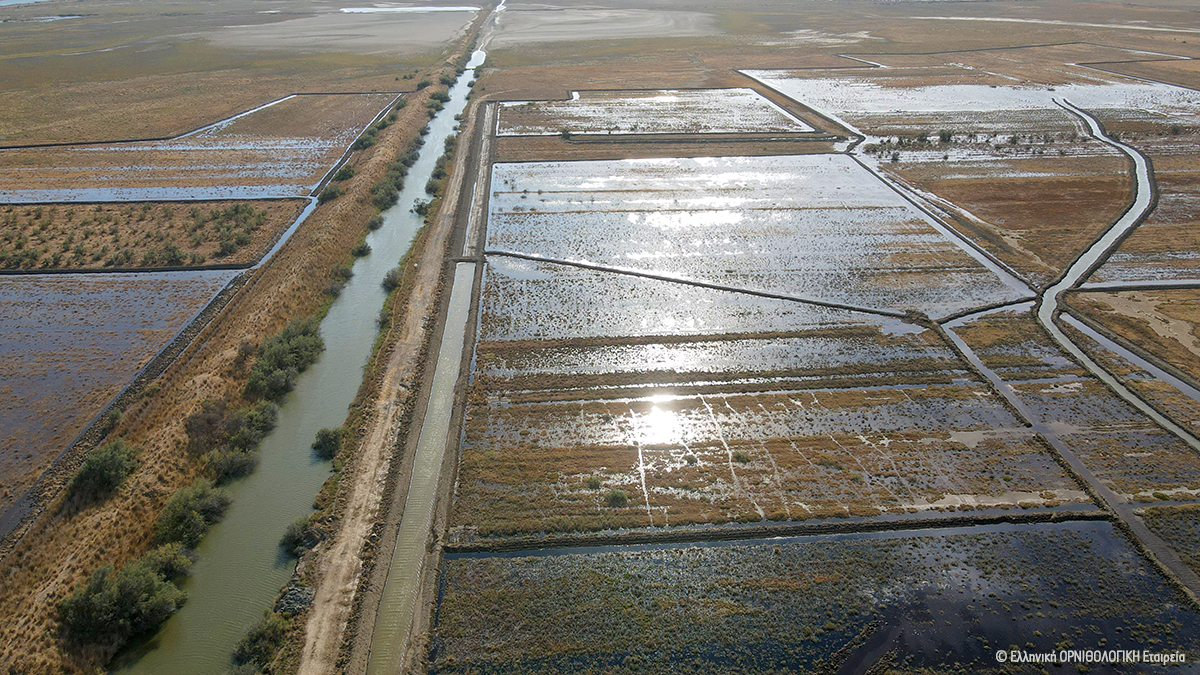
The purchased land, owned by the Hellenic Ornithological Society will be managed by NECCA, which, as the competent authority, will oversee the continuation of restoration activities in collaboration with the Hellenic Ornithological Society.
Initial results are already promising. The creation of small embankments and the retention of freshwater have attracted a variety of waterbirds, including protected and threatened species such as Eurasian Wigeon, Eurasian Teal, Bewick Swan, Ruddy Shelduck, Greater White-fronted Goose, Northern Shoveler, and Mallard.
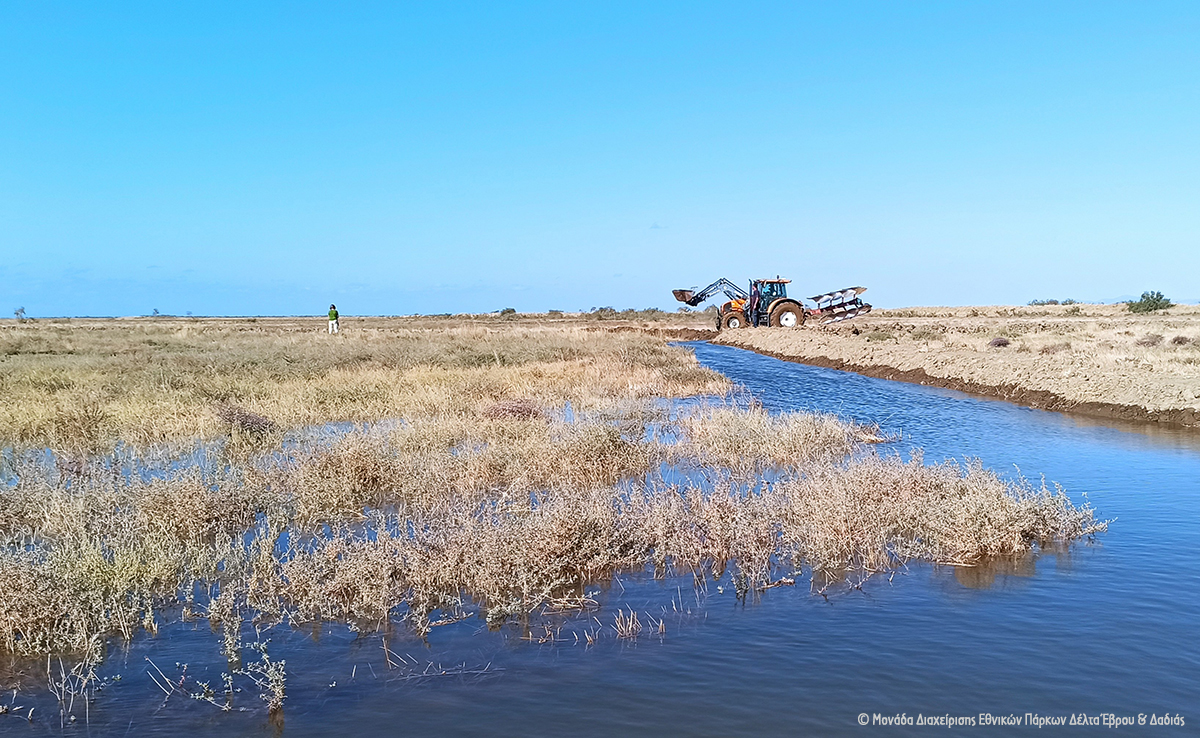
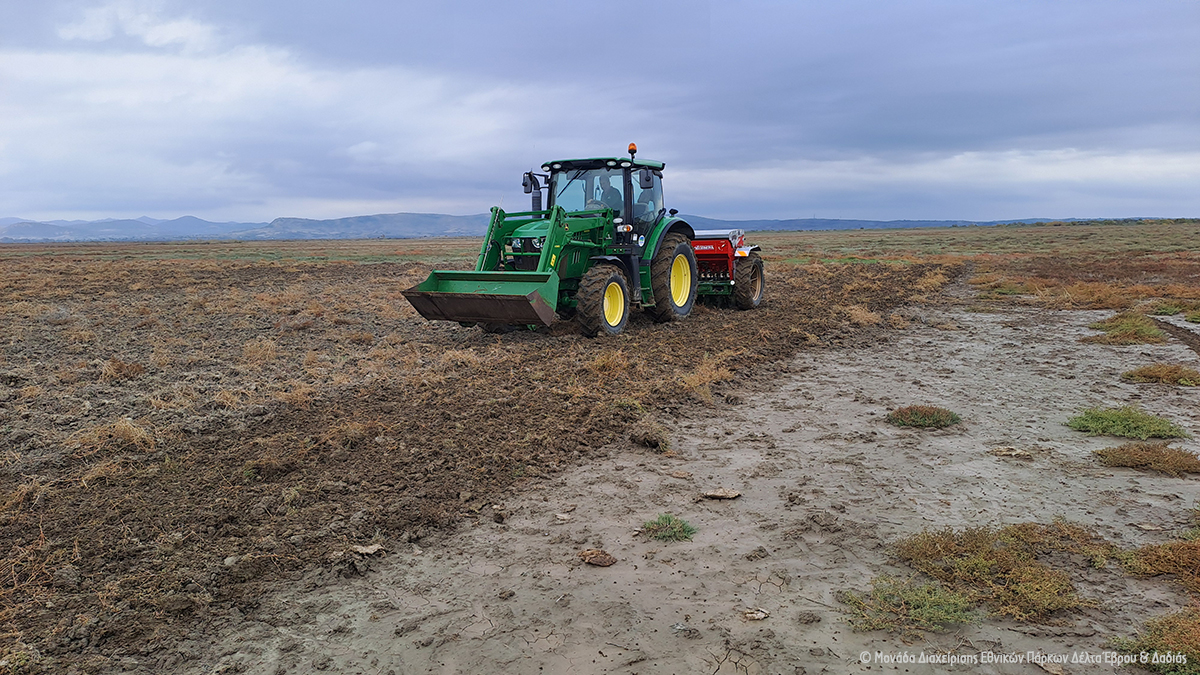
Beyond biodiversity benefits, the restoration of wet grasslands is also expected to enhance the area’s value as grazing land for livestock, demonstrating the potential for nature conservation and sustainable land use to coexist.
The acquisition of private land for ecological restoration is a well-established and successful conservation practice internationally. In Greece, however, this initiative represents an important step forward, introducing a new model whereby privately owned land is secured for long-term conservation and integrated into the Natura 2000 network.
Encouragingly, early signs from the area’s returning birdlife highlight the project’s potential. At a time when wetlands across Europe are in decline, the restoration of wet grasslands in the Evros Delta shows that targeted action, science-based management, and strong collaboration can help bring nature back—offering renewed hope for one of Europe’s most threatened bird species.
The Lesser White-fronted Goose has been part of the Arctic Migratory Bird Initiative of the Conservation of Arctic Flora and Fauna that is a working group of the Arctic Council, in which Norway is a member. The Norwegian Environment Agency has been co-financing the LWfG LIFE project and has thus actively contributed to the long-term conservation of the LWfG.
The initiative was implemented within the framework of the European LIFE LWfG Climate Project, which brings together eight organizations and entities from five countries (Greece, Finland, Lithuania, Estonia, and Hungary) for the protection of the endangered Lesser White-fronted Goose. The project is implemented with co-funding from the European Union and the Norwegian Environment Agency.