

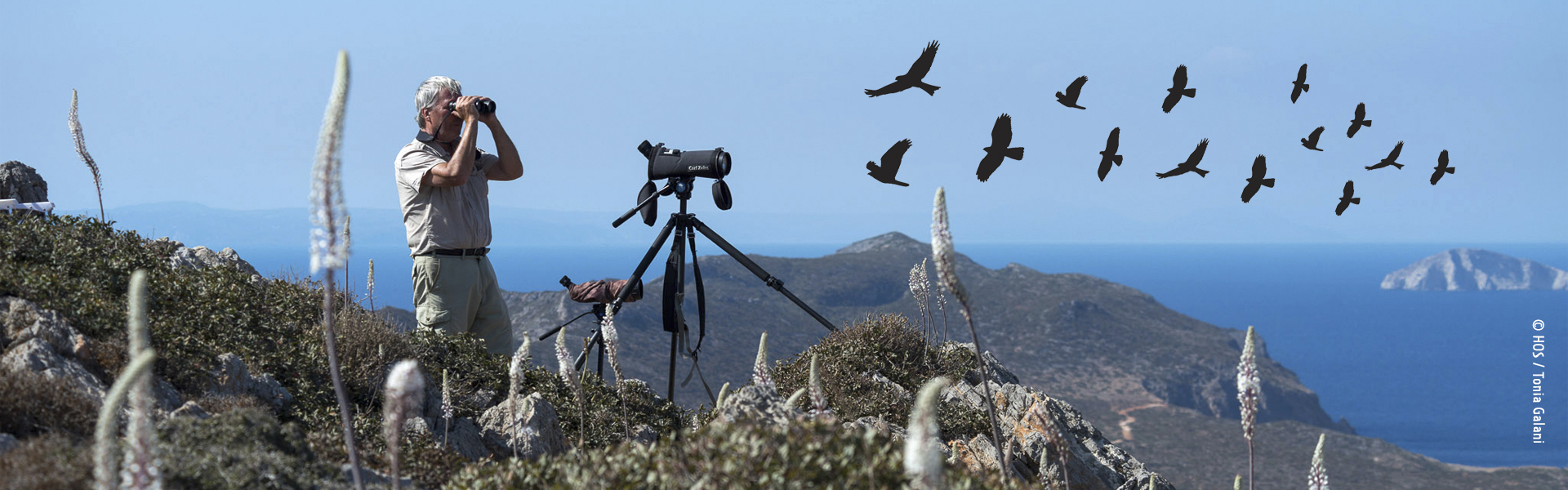
Greece is a vital migration corridor for raptors and other soaring birds traveling between western Palearctic and Africa. Even though millions of migrating soaring bird species crossing the country annually, a nationwide systematic monitoring scheme is lacking, due to limited resources and complex geomorphology.
Citizen participation in scientific research (Citizen Science) has become increasingly important for biodiversity conservation. It provides an unprecedented volume of data that can help identify—and subsequently address—changes in bird migration and distribution over extensive spatial and temporal scales.
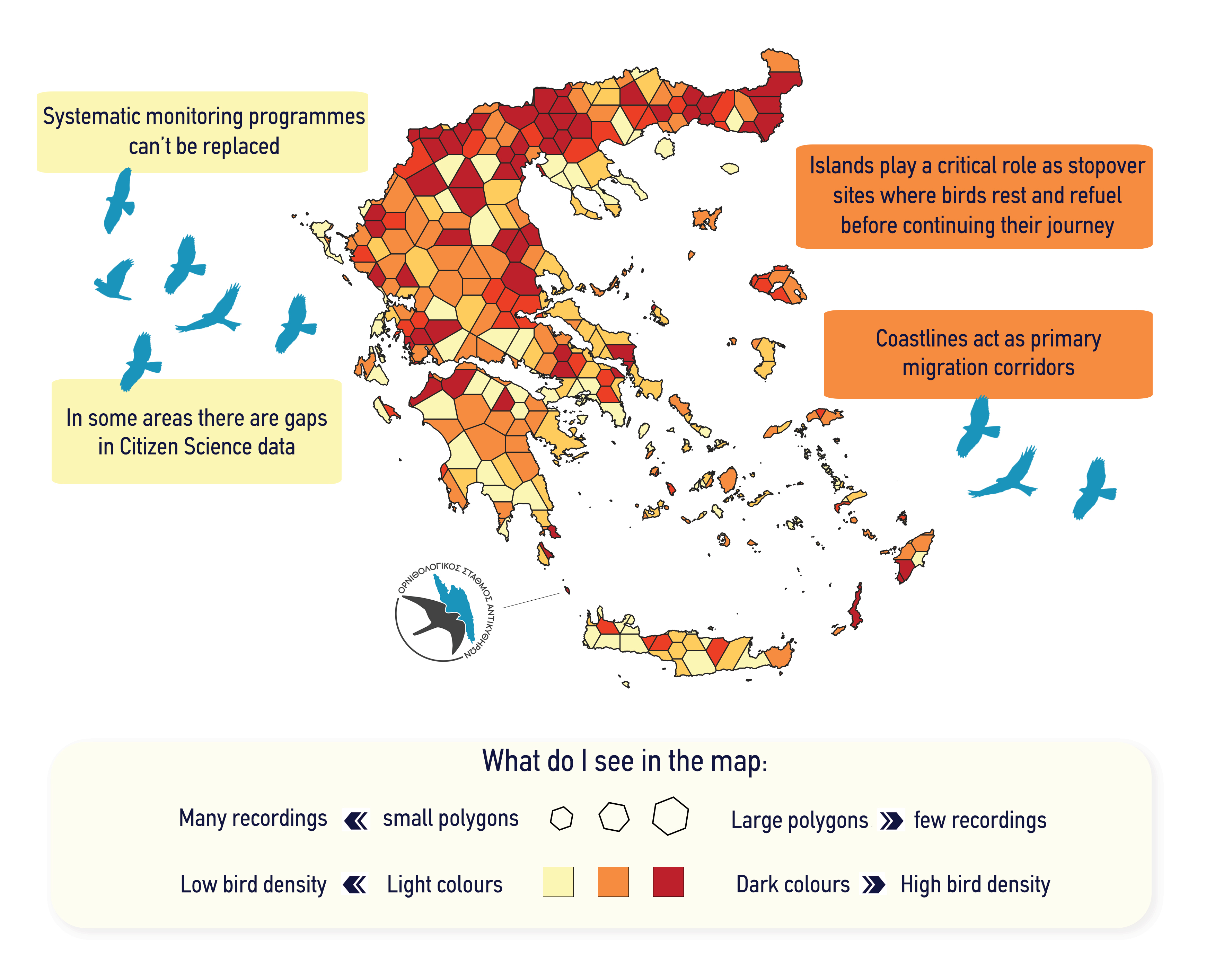
A recent study conducted by the Hellenic Ornithological Society / BirdLife Greece analysed Citizen Science data from the eBird platform and systematic monitoring data. The study aimed to map migration routes and examine the migration phenology of 18 species of raptors and other soaring birds. The results obtained from Citizen Science data were compared with findings from Greece’s only systematic monitoring programme for soaring bird migration, the Antikythera Bird Observatory.
Key Findings:
- Citizen Science data can serve as an effective tool for filling knowledge gaps and designing systematic bird monitoring programs.
- Coastlines act as primary migration corridors, with birds predominantly following the shores of the Aegean and Ionian Seas, minimizing long overwater flights.
- Islands play a critical role as stopover sites where birds rest and refuel before continuing their journey.
- While Citizen Science data are invaluable for tracking migration, they cannot fully replace systematic monitoring programmes.
- The establishment of additional systematic monitoring stations along key migration routes is recommended. Suggested locations include the southwestern tip of the Peloponnese, eastern Crete, Karpathos and/or Rhodes islands, Mount Olympus (Aegean side), and the Evros region, ensuring broader migration coverage.
Ensuring the protection of critical migration corridors is essential. Habitat loss due to human activities reduces the availability of resting and refueling sites, especially in coastal areas. Additionally, energy infrastructure can increase collision risks and critical habitat loss for migratory birds.
The study highlights the significant role of Citizen Science in collecting valuable data on bird migration. Contributions from birdwatchers were instrumental in mapping movements, demonstrating that such collaborations can enhance the conservation of migratory species. At the same time, the results emphasize existing gaps in spatial and temporal coverage, both in Citizen Science data and systematic monitoring projects, underscoring the need for additional monitoring locations.
Read the full study:
This research was funded by the GREEN FUND in the framework of the funding project “Natural Environment & Innovative Actions with the citizens 2023”.