



It is remarkable that, after more than 30 years of research on raptor migration in the Mediterranean basin, it is still possible to discover migration bottlenecks that have remained unknown until now!
In August 2024, at the westernmost "finger" of the Peloponnese, Akritas Cape (between Foinikounta and Koroni), we recorded nearly 12.000 raptors! This data highlights Akritas as the third most important hotspot for raptors crossing the Mediterranean, after Gibraltar and the Strait of Messina in Sicily! These raptors are primarily Honey Buzzards, originating from Eastern Europe, who begin a sea crossing of more than 400 kilometers from the Peloponnese to Libya.
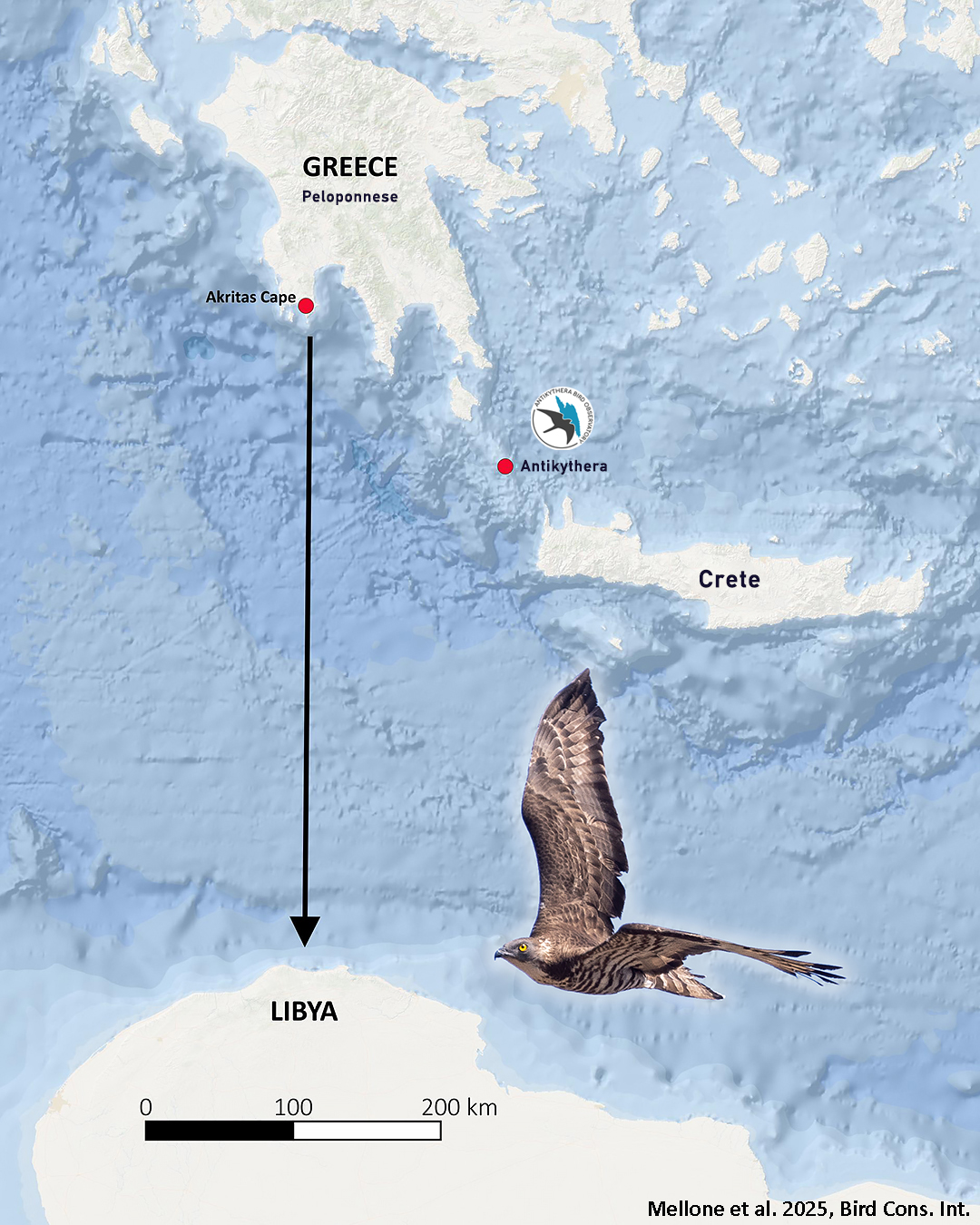
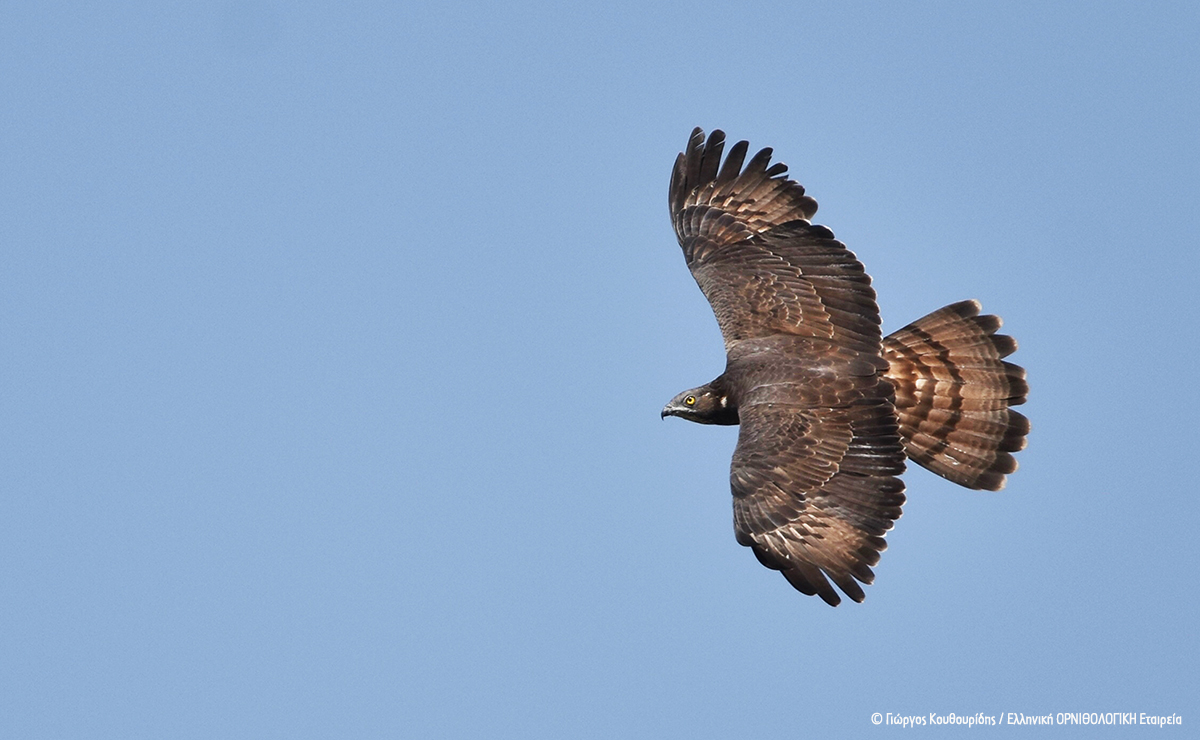
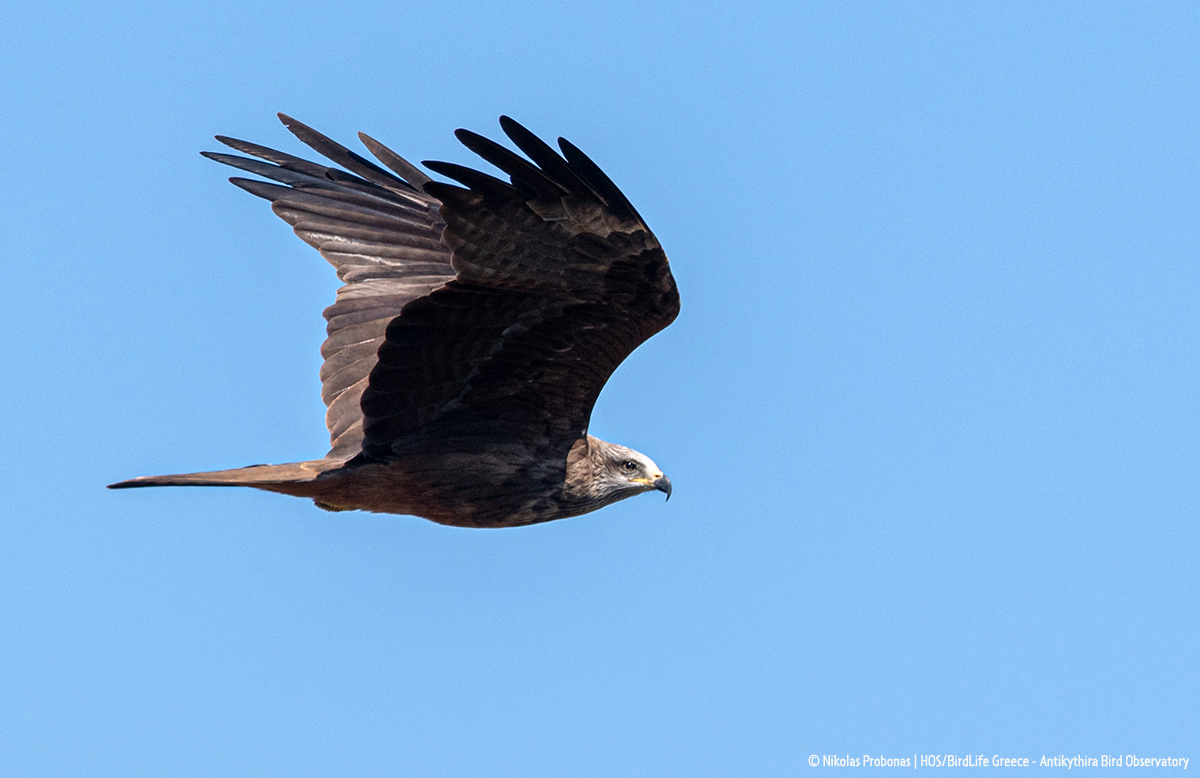
A total of 11.790 migratory raptors were observed, with the overwhelming majority (11.606) being European Honey Buzzards (Pernis apivorus). They were followed by Black Kites (Milvus migrans) with 143 individuals, and Western Marsh Harriers with 33, while smaller numbers of Montagu’s Harriers, White Storks and other species were also recorded. The highest single-day count of Honey Buzzards occurred on September 1st, with 2.441 individuals. Throughout the observation period, 93.3% of the recorded Honey Buzzards were observed between 09:00 and 12:00.
The Hellenic Ornithological Society supports the need to establish a long-term, systematic monitoring program of bird migration at Akritas Cape. Such a program would enhance our understanding of bird migration and support ongoing efforts to protect the region’s natural environment.
Summary Conclusions:
- Akritas Cape is a migration bottleneck of international importance. Within the Mediterranean region, it is one of the three most significant bottlenecks for the European Honey Buzzard [the other two being Gibraltar and the Strait of Messina, between Sicily and mainland Italy].
- The study period did not fully cover the migration season of the Honey Buzzard. Therefore, higher numbers are expected with a more intensive and extended monitoring effort.
- The observation period did not allow for the detection of larger raptors, particularly eagles (such as the Lesser Spotted Eagle, the Greater Spotted Eagle and the Eastern Imperial Eagle), as these species typically migrate through the area later within the season.
- This migratory bottleneck does not appear to be directly connected to Kythera-Antikythera route. Parallel counts at both sites enabled comparison, suggesting that some species, like the Black Kite, may often be diverted from Akritas to more easterly capes.
- Certain species, such as harriers, falcons, and herons, likely migrate over a broader front. Monitoring such movements would require more observation points and a larger number of observers.
- A smaller stream of raptors may possibly pass through the southwesternmost part of the peninsula, particularly via Methoni and the island of Sapientza.
- Akritas Cape also appears to be an important site for the migration of passerines and other bird species, as evidenced by opportunistic observations made alongside the raptor counts.
Scientific Paper presenting the findings:
Mellone U, Tsiopelas N, Barboutis C. Akritas Cape: a new raptor migration hot spot in the Balkans. Bird Conservation International. 2025;35:e19. doi:10.1017/S0959270925100129
Blogpost (in english): https://www.cambridge.org/core/journals/bird-conservation-international/article/akritas-cape-a-new-raptor-migration-hot-spot-in-the-balkans


The counts were conducted within the framework of the Project "From Europe to Africa: monitoring migratory raptors through systematic observation and citizen science" with the ultimate goal of ensuring the appropriate conditions for the effective planning and implementation of conservation and restoration actions for raptors and other soaring bird species. The Project is funded by the Green Fund under the “Natural Environment & Innovative Actions 2023” funding program.