

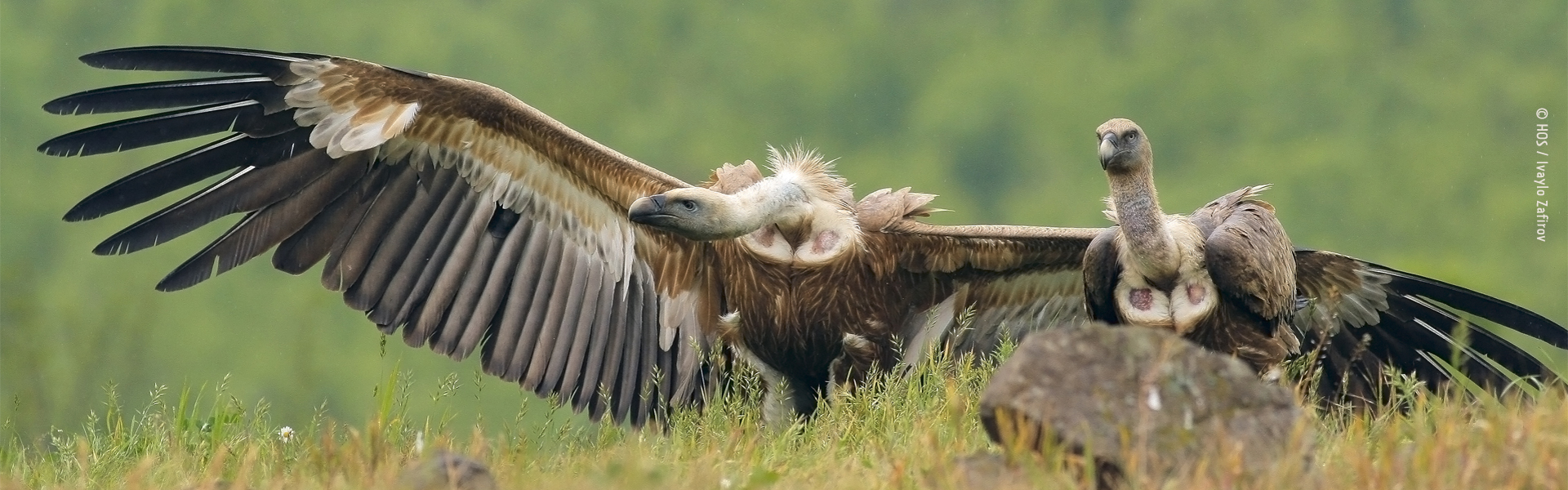
A new European conservation initiative, the LIFE Balkan GriffOn, has officially been launched. It aims to restore the Griffon Vulture population in mainland Greece and North Macedonia and secure the future of this and other vulture species in the Balkan Peninsula. The project is coordinated by the Vulture Conservation Foundation (VCF) and brings together experienced partners across several Balkan countries to address key threats to vultures’ survival.
The start of a new chapter
The Balkan peninsula hosted a vibrant vulture population until the middle of the 20th century. In the last couple of decades of the 2oth century, the combination of multiple threats drove vulture species close to extinction. Thankfully, several conservation programmes across Balkan countries have contributed to slowly revert this process, giving vulture species, especially Griffon Vultures, a hope for the future.
It is on the success of these programmes, and on decades of experience in vultures’ conservation, that the Vulture Conservation Foundation started to imagine a new beginning for Griffon Vultures (Gyps fulvus) in the Balkan Peninsula, with a focus on Greece and North Macedonia. The freshly started LIFE Balkan GriffON project will count on the expertise of knowledgeable partners with a long history of conservation efforts such as Hellenic Ornithological Society (HOS), University of Crete (UoC) - Natural History Museum, Natural Environment & Climate Change Agency (NECCA), Macedonian Ecological Society (MES) and Fund for Wild Flora and Fauna (FWFF), with the Vulture Conservation Foundation as a coordinator.
Focusing on key vulture strongholds in Greece and North Macedonia
Data from GPS tracked Griffon Vultures in the Balkans revealed that they occupy and visit seven vulture key zones on the Peninsula. They use these areas as core areas for breeding, but also as steppingstones during their movements and migrations. The project will focus on two of these strategic conservation areas that historically supported Griffon Vulture populations.
The Mt. Tymfi and Vikos gorge within the North Pindos National Park in Greece is a Natura 2000 protected site where Griffon Vultures historically bred. The area is characterized by steep cliffs and open landscapes, its main economic activity is traditional livestock pastoralism, and it is patrolled by an active anti-poison dog unit. The Vitachevo Plateau and Lake Tikvesh region is one of the most important regions for birds of prey in North Macedonia. It hosts a supplementary feeding station, and it is home to two pairs of the globally endangered Egyptian vultures (Noephron percnopterus) and 5-6 pairs of Griffon Vultures.
Teamwork and targeted conservation actions
The LIFE Balkan GriffON project is a six-year project (2026-2031), co-funded by the European Union. It has an all-around approach on vultures’ populations survival and well-being. It is based on six principles that will support all vulture species across the Balkans, starting from Griffon Vultures.
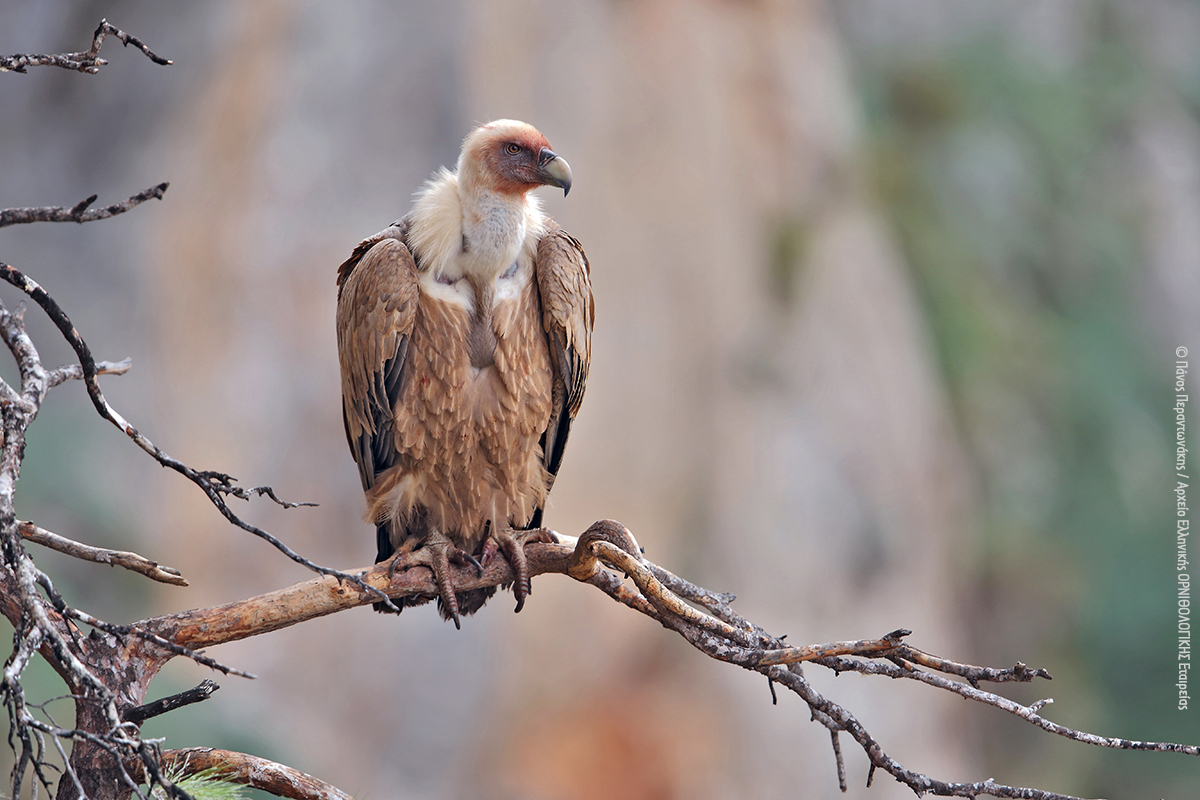
The project aims to establish new Griffon Vulture breeding nucleuses in Greece and North Macedonia, reinforce existing breeding populations and improve the species conditions. The Vulture Conservation Foundation will secure individuals from Spain for translocation activities in North Macedonia, while the Natural History Museum of Crete will secure individuals for translocations in mainland Greece. They will be transferred to acclimatisation aviaries and released following the soft release protocol in collaboration with local partners. 100 Griffon Vultures that will be translocated within the project will also be equipped with GPS transmitters to support research and preventive actions.
Following the steps of the Balkan Detox LIFE project, one of the Balkan GriffON goals is reducing vultures’ mortality from criminal poisoning through improved law enforcement and conflict mitigation and early-warning systems based on GPS tracking. It will increase vultures’ survival by improving the rehabilitation capacities of wildlife recovery centres and increasing food availability through supplementary feeding stations, that will also improve connectivity among vulture strongholds across the peninsula. Vultures’ conservation is strongly linked to the connection these species have with local communities. For this reason, the project will support traditional pastoralism, which also contributes to ensure safe feeding opportunities for vultures, and it will raise awareness on the role scavenging raptors play in ecosystems and local economies.
Well begun is half done
The LIFE Balkan GriffON project counts on an experienced team of local and international NGOs and institutions. It is based on solid scientific background and follows a successful tradition of vulture conservation projects across the Balkan Peninsula.
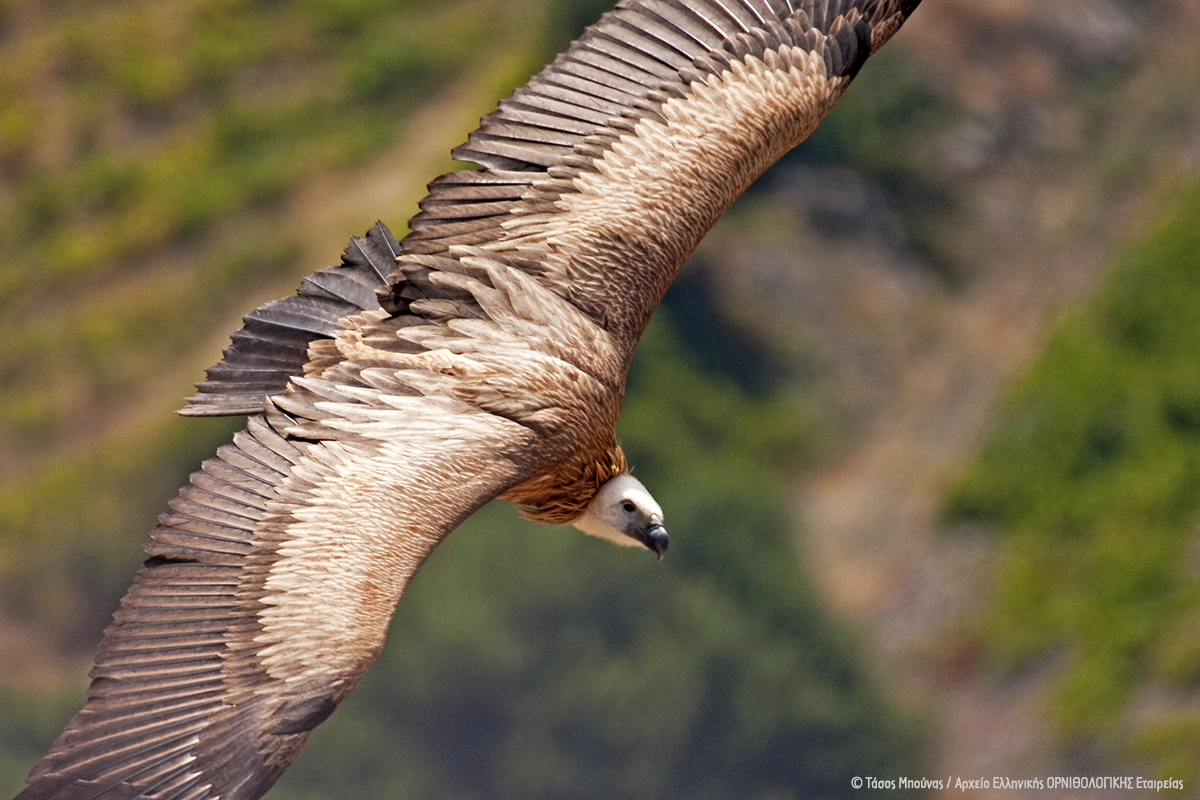
It ambitiously aims to increase the Griffon Vulture population in mainland Greece by at least 30%, double the population in North Macedonia, and contribute to a 10% increase in the overall Balkan metapopulation. Thanks to this project, the full recovery of the Griffon Vulture population in thethe Balkans will no longer be just a hope, but a shared commitment.